The Soundtrack of Home: How Pets Learn the Meaning of Everyday Noises
Published in Cats & Dogs News
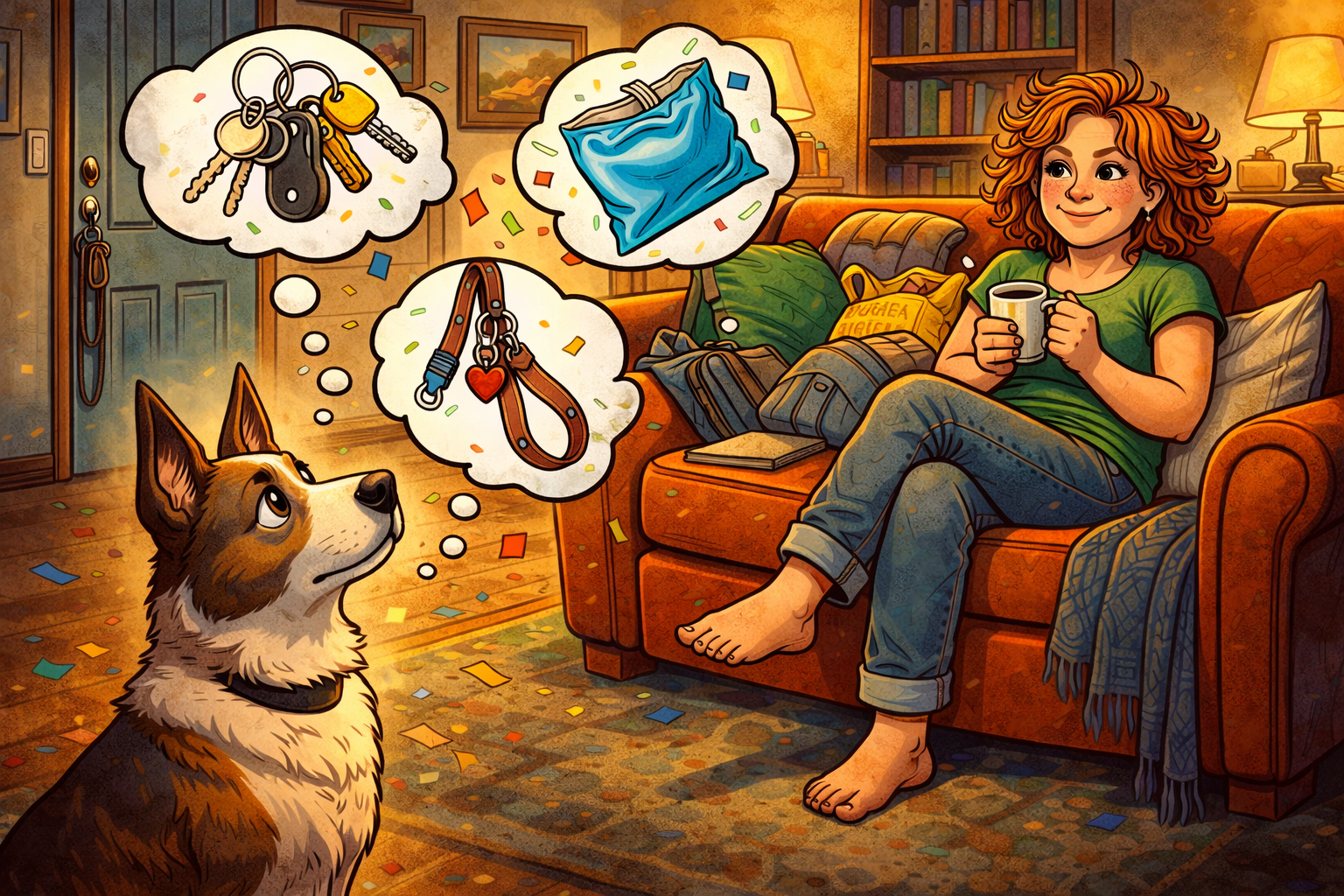
The first cue is rarely visual. It is the faint jingle of keys from a hook, the soft click of a laptop closing, the whisper of a snack bag opened two rooms away. For millions of households, these ordinary sounds form a kind of private language—one that pets learn with remarkable speed and uncanny accuracy.
Dogs and cats do not understand words the way humans do, but they excel at recognizing patterns. Over time, they build associations between sounds and outcomes: the rattle of a leash means a walk, the hum of a can opener signals dinner, the creak of a chair might mean someone is about to leave. These auditory cues, repeated day after day, become the soundtrack of home—and for pets, a reliable map of what happens next.
Researchers who study animal cognition describe this as associative learning, a process by which animals link a stimulus to a consequence. It is not training in the formal sense; rather, it is a passive, ongoing education shaped by routine and repetition. In the quiet background of daily life, pets are always listening.
The Keys That Mean Everything
In many homes, few objects carry as much emotional weight as a set of keys. The sound can trigger excitement, anxiety, or both, depending on what it has come to represent.
“For a lot of dogs, keys are predictive,” said a veterinary behaviorist. “They don’t just hear a noise—they anticipate an event.”
If keys typically precede a walk, a dog may sprint to the door, tail wagging in expectation. If they instead signal a departure, the same sound may cause a dog to hover anxiously or retreat to a favorite resting spot. Over time, pets refine their responses, learning subtle variations: the difference between keys picked up casually and keys grabbed with purpose.
Cats, often thought of as less reactive, are no less observant. Many will appear indifferent until the precise moment a familiar sound aligns with a meaningful outcome—then they move with startling decisiveness.
The Bag Crinkle Economy
Few sounds travel as quickly through a home as the crinkle of a bag. Whether it contains chips, treats, or something entirely unrelated, pets often respond as if it were a guaranteed reward.
The reason lies in generalization. Once an animal has learned that a certain type of sound is associated with food, it may apply that expectation broadly. A plastic grocery bag, a wrapper, even a piece of paper handled in a similar way can trigger the same hopeful attention.
Owners often reinforce this unintentionally. A dog that appears at the first crinkle of a bag may occasionally be rewarded with a scrap or a treat, strengthening the association. Even inconsistent reinforcement is powerful; in fact, it can make the behavior more persistent.
“It’s a bit like a slot machine,” the behaviorist said. “They don’t win every time, but they win often enough to keep playing.”
The Fake-Out Test
Many pet owners, amused by their companions’ responsiveness, attempt to outsmart them. They pick up keys without leaving, open a bag without sharing, or say a familiar word in a different context. For a short time, the illusion may hold.
But pets are quick studies.
When a sound no longer reliably predicts an outcome, animals begin to adjust. A dog that once raced to the door at every key jingle may pause, watching for additional cues. A cat that once appeared instantly at the sound of a can may delay, waiting for confirmation.
This process, known as extinction in behavioral science, does not erase the original learning entirely. Instead, it adds nuance. Pets become more discerning, weighing multiple signals before committing to a response.
In some cases, owners escalate the game, inventing code words or disguising sounds. Yet even here, pets often catch up, folding new patterns into their growing understanding of the household.
Silence as a Signal
Not all cues are audible. In many homes, the most powerful signals are the ones that emerge from the absence of sound.
A person who stops typing, shifts in a chair, or stands up after a long period of stillness may trigger immediate attention from a pet. These subtle changes often precede meaningful events—feeding, walking, or leaving—and animals learn to detect them with precision.
“Animals are incredibly sensitive to changes in routine,” the behaviorist said. “They notice when something stops as much as when something starts.”
This sensitivity can make pets seem almost prescient. A dog may rise and stretch moments before its owner reaches for a leash. A cat may appear at the exact instant a person decides, silently, to head to the kitchen. In reality, the animal is responding to a chain of small, often unnoticed cues.
The Personalized Dictionary
Every household develops its own vocabulary, a mix of words, sounds, and rhythms that carry specific meaning for the animals who live there.
Some cues are deliberate. Owners teach words like “walk,” “treat,” or “outside,” pairing them with consistent actions. Over time, pets learn to respond to these signals reliably.
Others emerge organically. The particular way a cabinet door closes, the cadence of footsteps in the morning, even the tone of a voice used in certain situations can become part of a pet’s internal dictionary.
Interestingly, pets often respond more to tone and context than to the words themselves. A cheerful, rising intonation may signal something positive regardless of the actual phrase. Conversely, a stern tone can convey disapproval even if the words are unfamiliar.
This flexibility allows pets to adapt to new environments and new people, integrating unfamiliar cues into their existing framework of understanding.
When They Get It Wrong
For all their perceptiveness, pets are not infallible. The same mechanisms that allow them to learn quickly can also lead to misinterpretation.
A dog may rush into the room at the sound of a snack wrapper, only to discover it contains something inedible. A cat may position itself expectantly by a bowl that remains empty. These moments of misplaced anticipation are a natural consequence of pattern recognition applied broadly.
Yet even these errors serve a purpose. Each incorrect guess provides new information, helping the animal refine its expectations. Over time, the number of false alarms may decrease, though they rarely disappear entirely.
For many owners, these moments are a source of gentle humor—a reminder of the hopeful, attentive nature of their companions.
The Soundtrack of Home
Taken together, these sounds form a layered and dynamic system of communication. Without formal instruction, pets learn to navigate their environment by listening closely, building a detailed understanding of daily life.
This process underscores a broader truth: animals are not passive inhabitants of the home. They are active observers, constantly gathering information and adjusting their behavior in response.
For humans, the sounds of home may fade into the background, barely noticed amid the routines of the day. For pets, they are anything but ordinary. Each jingle, rustle, and pause carries meaning, shaping expectations and guiding behavior.
In this shared space, where words are often secondary to tone and pattern, a quiet dialogue unfolds—one built not on language as humans know it, but on attention, repetition, and the steady rhythm of life together.
========
Maren Hollis is a lifestyle and home culture writer who explores the subtle ways people and animals share space and routine. She lives with two observant pets who miss nothing. This article was written, in part, utilizing AI tools.








Comments