Appeals court rules lack of quorum invalidated House proxy voting
Published in Political News
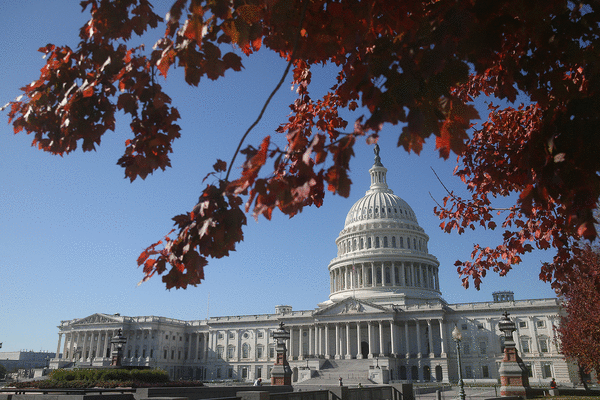
WASHINGTON — A federal appeals court found the proxy voting rules the House adopted during the COVID-19 pandemic violated the constitutional requirement for a quorum in a case challenging a 2022 omnibus spending package.
The U.S. Court of Appeals for the 5th Circuit, based in New Orleans, issued its ruling Friday.
The case hinges on a clause in the Constitution requiring a majority of the House, or quorum, be present for the chamber to do business. Friday’s ruling by the full court held that not enough members voted to pass the 2022 law because they were not actually in the chamber.
Judge Cory Wilson, writing for the 9-8 majority, said that while the Constitution provides broad discretion for Congress to pass its own rules, the legislature cannot get around the requirement that its members be present. The ruling focused on a series of provisions called the Pregnant Workers Fairness Act within the broader spending law and prohibited its enforcement against Texas.
“While the chambers of the legislature have much discretion regarding their rules of procedure, the Quorum Clause’s constraints on congressional power cannot be circumvented by congressional fiat,” the opinion says. The Democrat-led House adopted proxy voting as part of a broader social-distancing program during the pandemic.
The ruling opens up additional challenges to the spending law, and could be appealed to the Supreme Court. The final House vote on the law in 2022 saw low attendance, with only 201 members voting, short of the 218 majority.
Eight judges on the 5th Circuit dissented from the decision Friday, in two separate opinions. Judge James Graves Jr., writing for himself and six colleagues, chided the majority for being selective in its application.
“There is no explanation offered to explain why, if the entirety of the statute was unconstitutionally passed, this court’s judgment should be limited only to one small sliver of the multitrillion dollar bill,” Graves writes.
Graves criticizes the majority for looking too deeply into congressional procedures, and points out that both chambers have used unanimous consent, which does not include establishing a quorum, to pass measures for more than two centuries.
House Democrats adopted the proxy voting rules in 2020 but Republicans scaled them back when they took over the chamber. Throughout the current Congress, Democrats have pushed to reinstate at least some proxy voting rules.
Republicans and others filed legal challenges to the proxy voting rules in 2020, including then-Minority Leader Kevin McCarthy, but those cases were ultimately unsuccessful.
Texas officials first brought the lawsuit that resulted in Friday’s ruling in 2023, arguing the law is unconstitutional. Initially a federal judge agreed with the state, but was reversed by a three-judge panel of the 5th Circuit.
Texas then asked the full appeals court to weigh in, resulting in Friday’s ruling.
_____
©2026 CQ-Roll Call, Inc. Visit at rollcall.com. Distributed by Tribune Content Agency, LLC.

















































Comments