The Quiet Crisis of Manhood and the Profitable Lie Filling the Void
We are living through a quiet but consequential redefinition of manhood -- one shaped not by wisdom, responsibility or lived experience but increasingly by noise, performance and profit.
A growing segment of voices, amplified across social media, promotes a hollow version of masculinity rooted in indulgence, detachment and what can only be described as a kind of party-boy nihilism. It dismisses discipline as outdated, responsibility as optional, and commitment as a trap. It celebrates the illusion of freedom while quietly stripping away meaning.
But let us be clear: Much of this is not philosophy. It is business.
An industry is emerging that is highly organized and highly active built on selling identity to young men searching for direction. Courses, subscriptions, content funnels, "alpha" branding all designed to monetize uncertainty. The product is not empowerment; it is dependency. The message is not clarity; it is confusion packaged as confidence.
And confusion, it turns out, is very profitable.
Young men today are navigating a world radically different from that of previous generations. Technology, automation and cultural shifts have disrupted the traditional pathways that once defined manhood labor, provision and physical responsibility. In many ways, this evolution has created opportunity. But it has also created a vacuum.
When purpose is no longer assigned, it must be chosen. And choice, without guidance, can easily become drift.
Most people will drift. That is not an indictment; it is a reality of human nature. We are shaped by what is visible, what is repeated, and what is rewarded. In an environment where the loudest voices dominate the conversation, those voices begin to define the norm, regardless of their substance.
And here lies the deeper challenge.
Men who represent enduring discipline, accountability, service, family and stewardship are often the least incentivized to compete in this digital arena. They are building businesses, raising children, caring for communities. They are not monetizing masculinity; they are living it. And because of that, they are often quieter.
Meanwhile, those selling emptiness are relentless. They are present in every feed, every algorithm, every moment of idle scrolling. They understand attention. They understand insecurity. And they understand how to convert both into revenue.
This creates an imbalance not of truth but of volume.
The result is a generation exposed more frequently to distortion than to depth. A generation told that manhood is about consumption rather than contribution, dominance rather than discipline, image rather than integrity.
But real masculinity has never been defined by ease.
It has been defined by what a man is willing to carry.
To provide when it is difficult.
To remain when it is easier to leave.
To lead without applause.
To build something that outlives him.
These are not marketable slogans. They do not go viral. But they are the foundation upon which families, communities and nations build.
And they require something the current culture often resists: responsibility.
The truth is, freedom without responsibility is not freedom at all; it is drift. And drift, left unchecked, leads not to fulfillment but to emptiness.
This is why the moment we are in is not just cultural; it is moral.
If manhood is defined by those who profit from its erosion, we should not be surprised by the outcomes: disconnection, instability and a generation uncertain of its place in the world.
But there is another path.
And it begins with those who know better choosing not to remain silent.
Men who understand the weight and privilege of manhood must be willing to step into the conversation not as performers, not as influencers, but as examples. Not to sell but to serve. Not to dominate the space but to bring balance to it.
This does not require abandoning the modern world. It requires intentional engagement.
It means showing that strength and humility are not opposites.
That discipline is not restriction but liberation.
That commitment is not confinement but purpose.
It means reminding the next generation that manhood is not something you consume; it is something you build, day by day, choice by choice.
And yes, the incentives may not be equal. Those selling illusion will always have an advantage in speed and scale. But those grounded in truth have something far more powerful: durability.
Because in the end, empty narratives collapse under the weight of reality.
The question is not whether masculinity will be defined.
It will be.
The question is whether it will be shaped by those who profit from confusion or by those willing to live, model and pass on something better.
The next generation is watching.
And what they see, what we choose to show them, will determine far more than a trend.
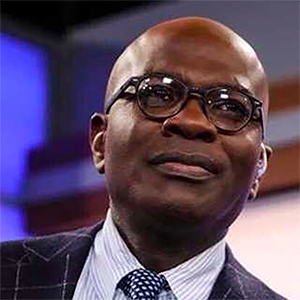
Armstrong Williams is manager/sole owner of Howard Stirk Holdings I & II Broadcast Television Stations and the 2016 Multicultural Media Broadcast owner of the year. To find out more about him and read features by other Creators Syndicate writers and cartoonists, visit the Creators Syndicate website at www.creators.com.
----
Copyright 2026 Creators Syndicate, Inc.



























Comments