The Work Dogs Do Without Training
Published in Cats & Dogs News
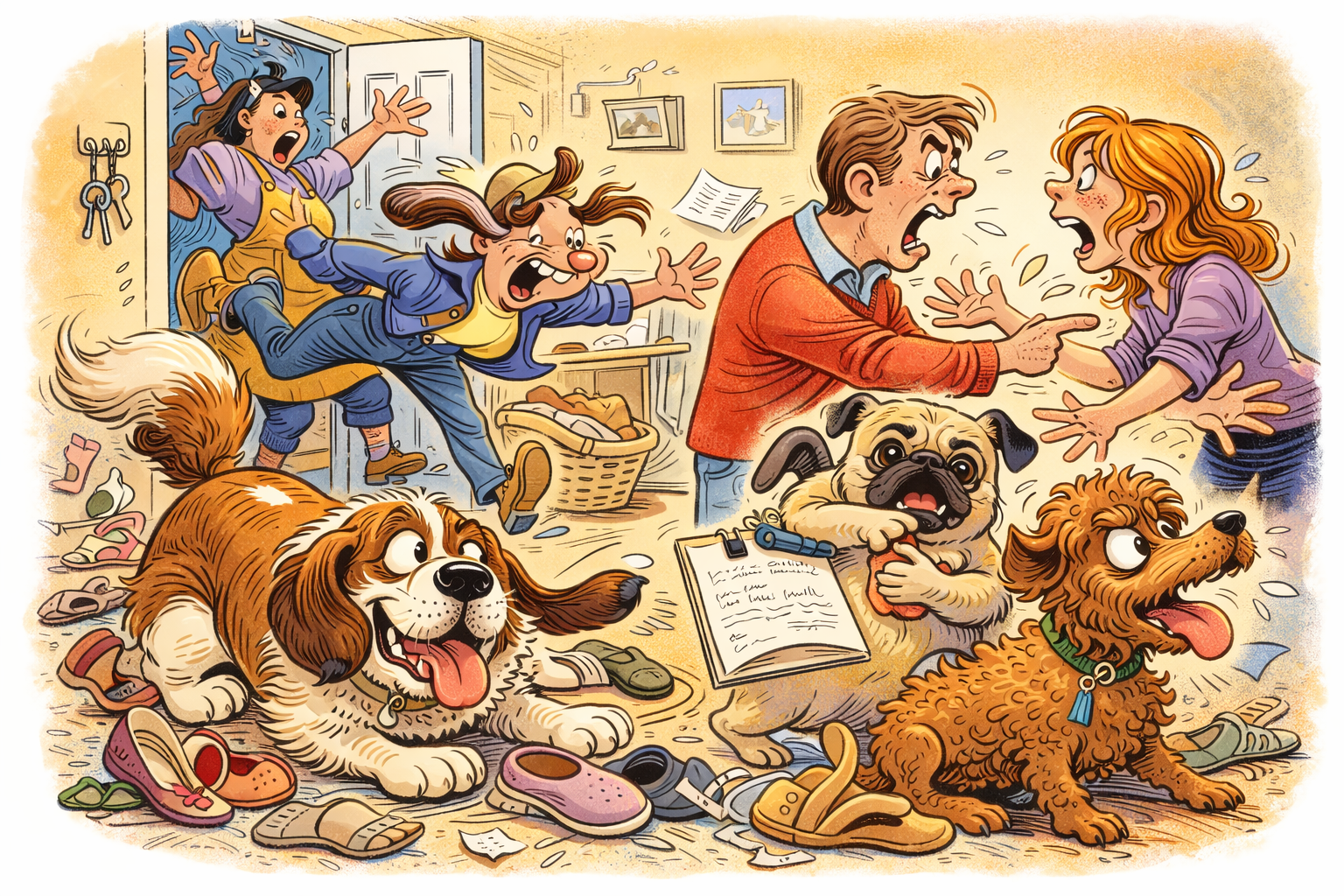
Much of modern dog culture revolves around training. Obedience classes, agility courses, service certifications, and working titles all reinforce the idea that a dog’s value lies in what it is taught to do. Yet in homes across the country, dogs perform quiet, consistent labor without ever being trained for it—and without being recognized as workers at all.
These tasks are not tricks. They are not jobs assigned by humans. They are roles dogs take on themselves, shaped by instinct, observation, and emotional attunement. This untrained work does not earn medals or certifications, but it often matters more to daily life than anything taught on command.
Work Defined by Presence
When people think of working dogs, they imagine action: herding sheep, guiding the blind, detecting explosives. But much of the work dogs do is defined by presence rather than movement.
Dogs station themselves near doors when families sleep. They monitor children at play. They position their bodies between vulnerable people and perceived threats. These behaviors are rarely taught. They emerge.
This kind of work is preventative. It is about readiness rather than response. A dog lying quietly in a hallway may look idle, but it is performing a self-appointed task: watchfulness.
The Household Sentinel
Many dogs adopt the role of sentry without instruction. They track the rhythms of the home, the usual sounds of cars, footsteps, and voices. Anything outside the pattern draws attention.
This is not constant barking or alarmism. Skilled sentry dogs differentiate between normal and abnormal stimuli. They may lift their heads, shift posture, or relocate before making noise.
Owners often misinterpret this as “nosiness” or “reactivity.” In reality, the dog is maintaining situational awareness for the group.
Emotional Regulation as Labor
One of the least acknowledged forms of canine work is emotional regulation. Dogs frequently adjust their own behavior to stabilize human environments.
Some dogs become quieter when tension rises. Others increase proximity during grief or illness. Some insert themselves physically—leaning, resting heads, blocking movement—not to seek comfort, but to create it.
This work is exhausting. Emotional regulation requires constant monitoring of tone, posture, and energy. Dogs performing this role often sleep deeply afterward, not because they are lazy, but because they have been busy.
The Peacekeeper Dog
In multi-person or multi-pet households, some dogs take on the role of peacekeeper. They intervene during arguments between other dogs, position themselves between quarrelling children, or redirect tension through play.
These dogs are not trained mediators. They are reading social dynamics and acting to reduce instability. Their interventions are often subtle: a nudge, a play bow, a body block, a shift in attention.
When peacekeeper dogs fail or are overwhelmed, household stress often escalates. Their absence is felt more than their presence.
Routine Enforcement
Dogs are powerful enforcers of routine. They track schedules with precision and remind humans—persistently—when something is late, skipped, or altered.
This behavior is often dismissed as food obsession or impatience. In reality, routine enforcement stabilizes the dog’s environment. Predictable patterns reduce cognitive load and increase safety.
By insisting on routines, dogs are maintaining order. They are not demanding indulgence. They are protecting structure.
The Child Watcher
Many dogs quietly assign themselves to children without being asked. They follow at a distance, lie nearby during naps, or sit at the edge of play areas.
This behavior is not universal, but when it appears, it is consistent. The dog is not supervising in a human sense. It is monitoring movement, sound, and emotional intensity.
When children cry, dogs often respond faster than adults—not to comfort, but to alert. This work is instinctive, not trained.
Caregiving Without Credentials
Some dogs provide caregiving support without any formal training. They wake owners during nightmares. They alert to changes in breathing. They position themselves to prevent falls or interrupt dissociation.
These behaviors often emerge gradually, shaped by repetition and outcome. The dog notices a pattern. It intervenes. The environment stabilizes. The behavior is reinforced.
While some dogs are later trained into service roles, many perform these tasks informally for years without recognition.
The Energy Buffer
Dogs often absorb excess household energy. In busy or chaotic environments, they act as buffers—remaining calm, grounded, and steady while activity swirls around them.
This is not passivity. It is restraint. These dogs are choosing not to escalate despite stimulation. They model calm simply by existing within it.
Families often describe these dogs as “easy” or “low maintenance,” without realizing how much effort that steadiness requires.
Why Some Dogs Take on More Work
Not all dogs perform untrained labor equally. Temperament, early environment, and breed tendencies all influence whether a dog assumes these roles.
Dogs bred for cooperation, guarding, or companionship are more likely to monitor humans closely. Dogs raised in unpredictable environments may develop heightened vigilance. Some dogs simply have personalities that incline toward responsibility.
These dogs are not better or worse than others. They are differently oriented.
The Cost of Invisible Labor
Unrecognized work can lead to burnout. Dogs who constantly regulate emotions, monitor environments, or enforce routines may develop anxiety, reactivity, or physical tension.
Because the work is invisible, owners may not realize the dog needs rest, enrichment, or relief. The dog appears “fine” until it is not.
Supporting working dogs—even informal ones—means acknowledging the load they carry.
Letting Dogs Stop Working
One of the greatest gifts owners can give is permission for dogs to rest. Predictable routines, safe spaces, and moments of true disengagement allow dogs to step out of their self-appointed roles.
Training can help here—not to create work, but to limit it. Teaching a dog that it does not need to monitor every sound or follow every movement can be profoundly relieving.
Not all work should be discouraged. But all work should be supported.
Rethinking What Counts as Work
The cultural emphasis on trained skills has obscured a deeper truth: dogs have always worked alongside humans in ways that defy certification.
They watch. They regulate. They stabilize. They enforce structure. They keep vigil.
These tasks are not flashy. They are not measurable. But they shape households, relationships, and emotional climates every day.
Dogs do not need to be taught to matter. They are already working.
========
Thomas Avery is a writer covering canine behavior, domestic labor, and human–animal relationships. He lives with a dog who has appointed herself head of security, morale, and schedule enforcement. This article was written, in part, utilizing AI tools.








Comments