Living With Australian Shepherds: Smart, Tireless, and Not for the Idle
Published in Cats & Dogs News
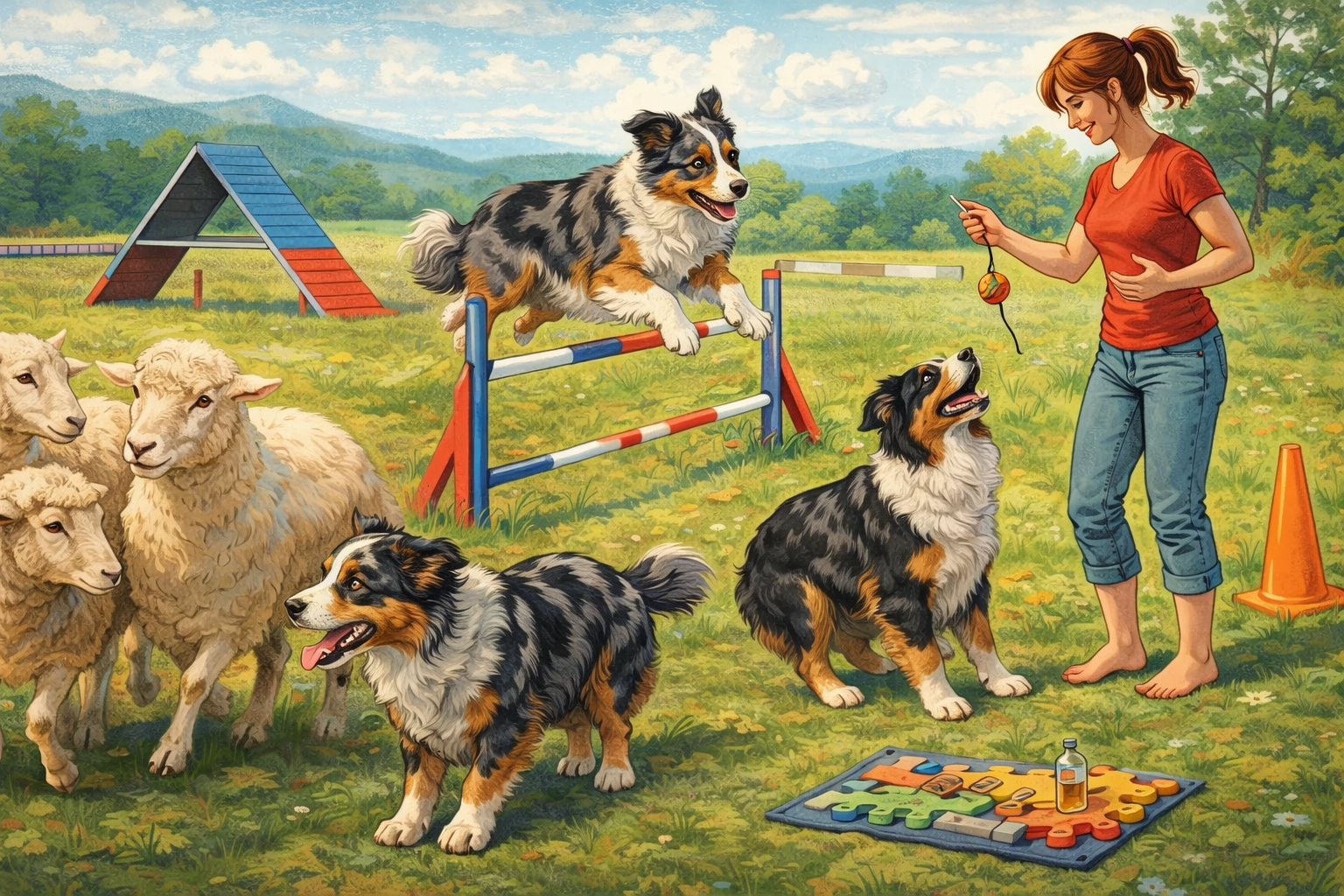
Australian shepherds are not subtle dogs. They are fast learners, relentless problem-solvers, and creatures of motion whose idea of a good day involves both physical exhaustion and mental satisfaction. Bred to herd livestock and make independent decisions at a distance from their handlers, Aussies bring intensity into any household they join. For owners who understand that intensity and plan for it, the breed can be a deeply rewarding companion. For those who do not, frustration arrives quickly—often on four muddy paws.
Australian shepherds consistently rank among the most intelligent dog breeds, but intelligence alone does not make for an easy pet. What defines the breed is drive. Aussies were developed to work long hours, respond instantly to cues, and remain alert to their environment at all times. When that drive has no outlet, it does not disappear. It redirects.
Understanding the Australian Shepherd Mindset
Australian shepherds are working dogs first and companions second. This is not a criticism; it is a design feature. Their brains are tuned for scanning, anticipating movement, and reacting decisively. In a home setting, this often manifests as shadowing behavior, intense eye contact, and a tendency to “manage” people, other pets, or even household routines.
Many first-time owners mistake this attentiveness for affection alone. While Aussies are often deeply bonded to their people, their focus is also a job-seeking behavior. If no job is provided, the dog will invent one. Herding children, policing doorways, obsessively monitoring windows, or dismantling furniture are all examples of a working brain with nothing appropriate to do.
Recognizing this mindset early is crucial. Australian shepherds do not need to be “calmed down.” They need to be directed.
Exercise Is Necessary but Not Sufficient
A long walk, even a brisk one, is rarely enough for an Australian shepherd. Physical exercise matters, but it does not replace mental engagement. A tired body with an under-stimulated mind often produces a dog that is still restless, vocal, or destructive.
Structured activity works best. This can include agility training, herding trials, flyball, advanced obedience, or scent work. Even daily routines—such as teaching the dog to carry objects, retrieve specific items by name, or perform complex cue chains—can satisfy the breed’s need to think.
Unstructured running, such as repeated games of fetch, should be used carefully. While it burns energy, it can also reinforce obsessive behaviors if overused. Balance is key: physical exertion paired with problem-solving.
Training Is Not Optional
Australian shepherds are highly trainable, but that does not mean they are automatically compliant. They learn quickly, including learning which rules are inconsistently enforced. Training should begin early and continue throughout the dog’s life.
Positive reinforcement methods work particularly well with Aussies, who are sensitive to tone and prone to shutting down under harsh correction. Clear expectations, consistency, and rewards that engage both food and play drive produce the best results.
Equally important is teaching an off switch. Many Australian shepherds struggle with relaxation. Mat training, impulse control exercises, and calm-behavior reinforcement help the dog learn that stillness is also a task—and a rewarded one.
Socialization and Environmental Awareness
Because Australian shepherds are alert and observant, they can be prone to reactivity if not properly socialized. Early, positive exposure to a wide range of people, environments, and animals helps prevent suspicion or over-protectiveness later in life.
This does not mean overwhelming the dog. Thoughtful exposure, where the dog remains below stress threshold, is more effective than chaotic encounters. Teaching the dog to look to the handler for guidance rather than making unilateral decisions is especially important in public settings.
Aussies are also known for strong attachments to their households. Without careful socialization, this can translate into wariness of strangers or territorial behavior.
Living With an Aussie in a Non-Working Home
Not every Australian shepherd lives on a ranch, and many thrive in suburban or urban environments when their needs are met. The key is intentionality. Owners must build daily structure into the dog’s life.
Puzzle feeders, rotating toy selections, training sessions, and planned exercise are not luxuries for this breed; they are necessities. Without them, problem behaviors are not signs of a “bad dog,” but of unmet needs.
Potential owners should also consider time commitments. Australian shepherds do poorly when left alone for long stretches without enrichment. Boredom, anxiety, and compulsive behaviors can develop quickly.
The Reward of Doing It Right
When properly engaged, Australian shepherds are extraordinary companions. They are loyal without being clingy, playful without being chaotic, and perceptive to a degree that often surprises even experienced dog owners. Many develop an almost uncanny ability to read human emotion and respond accordingly.
The relationship works best as a partnership. Australian shepherds were bred to collaborate with humans, not simply coexist with them. Owners who embrace that role—teacher, guide, and teammate—often find that the effort invested is returned tenfold.
Australian shepherds are not dogs that fade into the background of a household. They are vivid, demanding, and intensely present. For those prepared to meet them where they are, life with an Aussie is anything but dull.
========
Marian Holt is a freelance writer and longtime herding-breed owner who covers animals, behavior, and everyday domestic life with a practical, unsentimental eye. Her work focuses on the intersection of instinct, environment, and responsibility, especially in working dogs living modern lives. This article was written, in part, utilizing AI tools.








Comments