More than 1 million NYC residents already rely on food pantries as impact of SNAP cutbacks looms
Published in News & Features
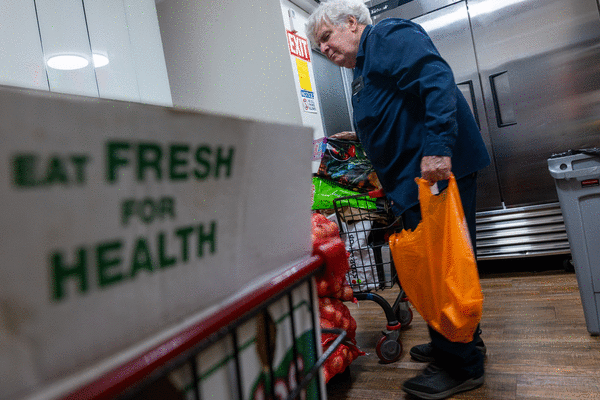
NEW YORK — Nearly 1.3 million New Yorkers, about 15% of city residents, relied on food pantries or other free food providers to help put meals on the table — a grim reality only expected to worsen amid cutbacks in the federal SNAP program, according to a new report tracking poverty in the five boroughs by the Robin Hood organization and Columbia University.
The problem touches a wide range of New Yorkers. More than half of users are people who are working or living with a spouse or partner who works, and represent a broad cross-section of a city caught in the grips of a devastating affordability crisis, researchers said.
“Work should be enough to put food on the table. For too many New Yorkers, it isn’t,” Richard Buery, Jr., CEO of Robin Hood, an anti-poverty philanthropy, said in a statement.
“Pantries are now essential, and they feed 1.3 million New Yorkers and lift about 51,000 out of poverty. But they cannot absorb cuts to SNAP on their own. We must protect the programs that keep New Yorkers fed and make sure the pantries that catch people when other supports fall away have the resources to meet rising needs.”
Buery pointed out that the dire findings outlined in Robin Hood’s report, “Spotlight on Food Assistance and the Poverty Shortfall in New York City,” represent conditions before recent federal cuts to the Supplemental Food Assistance Program, which resulted in 26,500 New Yorkers losing SNAP benefits on Oct. 1.
That means reliance on pantries — one of only several food-based safety nets — is only expected to grow.
Researchers said the report had several troubling findings:
In an average year, 47% of pantry users experience a major shock to their finances and 1 in 5 experience a major health crisis.More than 30% of New Yorkers — more than 2.6 million people — experienced food hardship in 2025. New Yorkers who use food pantries represent a broad cross-section of the city’s population, though older adults, families with children, and groups with elevated poverty rates are more likely to rely on pantry food.
“Pantry users look a lot like New York City as a whole,” said Christopher Wimer, director of the Center on Poverty and Social Policy at Columbia University, which co-author of the report with Robin Hood.
“They turn to pantries when budgets are stretched thin, and life knocks them off balance. Pantries make a real difference, but our findings also show their limits. They complement public food assistance and cannot replace it.”
To close the food gap, the report recommends added funding for pantries and other emergency food providers, federal and state tax credits for affected families and security enhancements to Electronic Benefit Transfer (EBT) cards.
_____
©2026 New York Daily News. Visit nydailynews.com. Distributed by Tribune Content Agency, LLC.






Comments