Idaho lawmakers seek immigration status of HIV patients using state resources
Published in News & Features
BOISE, Idaho — The Department of Health and Welfare would be required to report the immigration status of people using state HIV prevention services under a proposed public health budget.
The move comes after Idaho lawmakers in 2025 passed a measure to prevent some immigrants from accessing services such as soup kitchens, prenatal care and crisis counseling.
Just days before that law was set to take effect, the American Civil Liberties Union of Idaho announced a lawsuit against part of the law that would prevent some immigrants from accessing HIV medication.
The plaintiffs argued that the immigrants couldn’t receive the medication otherwise, and the people needing those meds could face severe health issues or even death, while Idaho risked an HIV spread. A judge agreed and blocked that portion of the law from going into effect while litigation is ongoing.
On Tuesday, during a meeting of the state’s powerful budget committee, lawmakers voted 14-4 to include the immigration report language in a Health and Welfare budget.
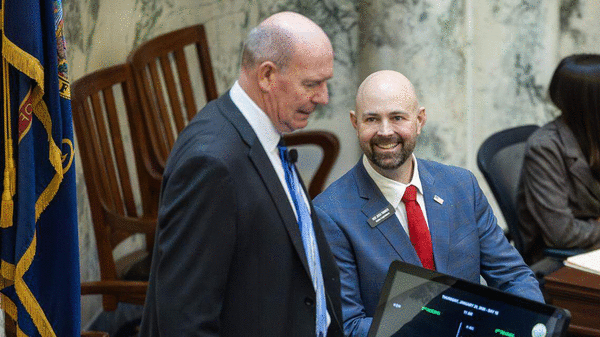
The budget committee’s co-chair, GOP Rep. Josh Tanner, told The Idaho Statesman that someone in DHW told him that there was an increase in HIV among undocumented immigrants. He said he would not share the source.
The report was important to help the state figure out how to get ahead of any increases, he said.
“It’s important to understand,” Tanner said.
AJ McWhorter, a spokesperson with the Idaho Department of Health and Welfare, said there hasn’t been a trend in HIV cases for the past five years, but there have been regional increases “here and there.”
HIV cases have increased in the eastern and southeastern parts of the state in 2026, according to East Idaho News, with seven cases diagnosed in the first three months of the year — matching the typical yearly average.
The number of cases in that part of the state was “unexpected,” McWhorter said.
“As for what is causing the increase in Eastern and Southeastern Idaho, we don’t see a single determining factor,” McWhorter wrote in an email. “Increases can occur due to changes in testing patterns, partner networks, or a variety of other community factors.”
During Monday’s meeting, Tanner refused to let Democratis Sen. Melissa Wintrow, talk about the motion, instead repeatedly calling for a vote to be taken. But she managed to slip a word in:
“I need to say I think it’s really important that we are not discriminating against people based on a disease and an infection,” Wintrow said. “Disease knows no immigration status.”
©2026 The Idaho Statesman. Visit idahostatesman.com. Distributed by Tribune Content Agency, LLC.






Comments