Gov. Josh Shapiro unveils $53.3 billion Pa. budget proposal for 2026-27
Published in News & Features
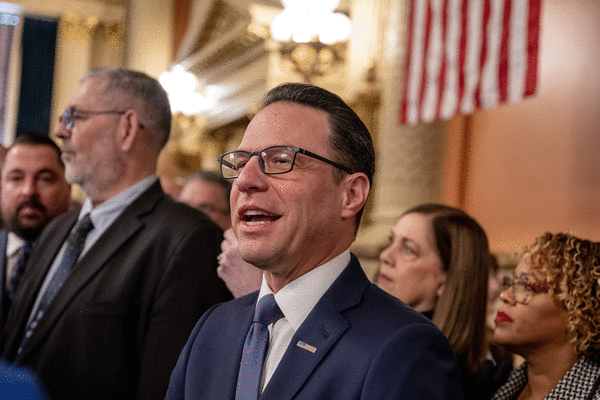
HARRISBURG, Pa. — Highlighting his belief that Pennsylvania continues to be "on the rise" under his watch, Gov. Josh Shapiro on Tuesday unveiled a $53.3 billion state budget proposal for 2026-27 that pumps up spending on K-12 education, seeks to reap billions from skill games regulations, and almost certainly will trigger a fight over tapping the state's Rainy Day Fund.
The Democratic governor told a combined House-Senate audience, "I know government can be a productive force for good in people's lives" — a concept he felt confident of because "I've seen it over the past three years."
Shapiro said there were no tax increases in this year's proposal, and his plan would not require any "broad-based tax increase" for the next five years. To that he added a preemptive message to Republicans who control the state Senate: "I know some of you try to score political points by saying that it does — but saying that doesn't make it true."
Nonetheless, the numbers seemed sure to stir a lot of debate.
The spending figure projected by Shapiro is about $4.5 billion higher than his projection for revenue, and he proposed to offset that with a similar-sized transfer from the so-called Rainy Day Fund. That fund currently contains about $7.6 billion, and many Republicans dislike the concept of touching it.
The annual address is the opening template for the multi-phase process that leads to a state budget and ideally ends before a state-set deadline of June 30.
The politically divided Legislature and Shapiro went 135 days beyond that deadline last year, leading to the withholding of billions of dollars in state payments that caused financial havoc, furloughs, and program interruptions for counties, school districts and human service agencies.
"We all recognize it took too long last year, and that had real impacts on Pennsylvanians," Shapiro said. "We learned that we all need to be at the table, and that we all need to be at the table sooner."
In that vein, Shapiro said he had invited leaders of the four legislative caucuses to meet with him Wednesday to get this year's process started — and all had accepted.
Almost immediately, the proposal began to take fire from Republicans. Rep. Jason Ortitay, a Washington County Republican, said, "This budget spends billions more dollars than last year, drains nearly 60% of the state's savings account and still leaves families dealing with the same things they were dealing with yesterday: high property taxes, rising costs and schools that aren't getting results for kids who are struggling."
The governor proposed continuing a two-year-old program of boosting K-12 education funding through the lens of fairness — triggered by a landmark 2023 court ruling — with new dollops of "adequacy" and "tax equity" supplements for many school districts. They would add up to an additional $565 million.
Among other new initiatives, he proposed a set of standards and requirements for new data center proposals in the state; a borrowing program to fund critical infrastructure improvements; closing a tax loophole that allows big corporations to avoid taxes here; a series of safeguards to protect renters from unfair treatment in housing; and several protections for children, health and safety in the deployment of artificial intelligence.
The state's big gap between spending and revenue has been an issue with Republicans for years. Shapiro proposed closing much of that gap with new regulations that would cover the tens of thousands of so-called skill games that currently are not covered by law. It would put them in a gaming device category to be taxed at a rate of 52%, and ultimately generate $2 billion a year in new revenue.
Another revenue generator proposed once again by the fourth-year governor was legalization of recreational marijuana.
The new Shapiro concept would have adult-use legalization happen on July 1 and allow regulated sales to begin six months later — leading to $200 million a year in revenue after the system is fully in place.
Shapiro also called for an increase in the minimum wage from the current $7.25 an hour to $15, a move he said would lead to $80 million a year in new revenue.
Beyond that, his proposal anticipates the rise in incomes for many people brought about by that change would decrease the number of people who qualify for Medicaid and set up the transitioning of many children to the Children's Health Insurance Program. That, the administration indicated, would help set up savings to the Department of Human Services of $300 million a year.
This story will be updated.
© 2026 the Pittsburgh Post-Gazette. Visit www.post-gazette.com. Distributed by Tribune Content Agency, LLC.




Comments