How the Miami River went from cocaine and crime to a luxury hotspot
Published in Business News
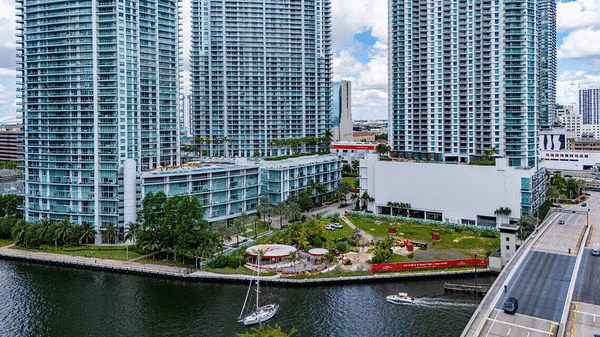
Two decades ago, the Miami River was a punchline.
The waterway was best known for its rusting cargo ships, crime and pollution. On a river notorious for stolen cargo and cocaine trafficking, the joke often went: What’s at the bottom?
Now, as luxury construction lines the banks of what was once the last place people wanted to be, it’s clear the river has entered a new chapter, with developers turning to what they see as Miami’s final waterfront frontier.
Today, the Miami River is seeing more development — and higher-end development — than ever before. In a city where most prime waterfront real estate has already been built on, the once maligned banks of the Miami River are fertile ground for a new concrete canyon.
Several luxury projects have already gone up along the river, including the Aston Martin Residences and Viceroy Brickell. And several are coming soon: the Baccarat Residences and the Faena Residences Miami are both under construction and will bring hundreds of new ultra-luxury condos to the river when finished.
Standing in Little Havana’s riverside José Martí Park on a recent afternoon, Miami historian Paul George pointed out buildings along the Miami River that were under construction and others about to be demolished and redeveloped.
Across the river was a city of Miami administration building built in the 1990s, soon to be replaced by luxury condos. George, now in his 80s, remembers a time before the river could be considered anything close to luxury.
Back then, the Miami River was known at best a grimy working waterway, and at worst, a crime-ridden artery of South Florida’s cocaine trade. But George said he first started to notice that change in 1982, when the Hyatt Regency hotel opened on the river.
“I found it amazing,” George said. “I said, ‘Look, this is interesting.’”
The Hyatt inaugurated a new era for the Miami River, George said. But the hotel, once emblematic of the river’s rising star, will soon become a different kind of symbol of its transformation.
The hotel and neighboring James L. Knight Convention Center are set to be demolished and replaced by the Miami Riverbridge, a planned $1.5 billion mixed-use supertall skyscraper development.
But that’s how things go on the ever-changing Miami River, George said. Just like Miami more broadly, “it reinvents itself.”
Horacio Stuart Aguirre, the chairman of the state founded advocacy and policy organization the Miami River Commission, said over the past two decades, the river has transformed from a “decrepit, dark, murky area of town with slimy reputation” into a “sought-after destination.”
From early civilization to party boats
The Miami River, a 5 1/2-mile natural waterway, formed thousands of years ago as water drained from the Everglades into Biscayne Bay. It was the cradle of the indigenous Tequesta civilization dating back around 2,500 years. Construction crews still unearth artifacts and remains from that period, which has complicated and sometimes stalled development along the river.
Iris Escarrá, a land use attorney with the law firm Greenberg Traurig, said archaeological protocols typically add at least six months to projects being built along the river.
In modern times, the Miami River became a polluted industrial river lined with bait shops and shipyards. It’s a reputation the river still hasn’t totally shed, even as luxury condo towers have begun to pop up along its banks.
Reports from the environmental nonprofit Miami Waterkeeper show that the river remains one of the most polluted bodies of water in Miami-Dade County, especially after heavy rainfall. This is caused by a variety of factors, including industrial stormwater runoff, sewage leaks, drainage issues and illegal dumping, according to the nonprofit.
In perhaps its most infamous chapters, the Miami River was a highway for trafficking illegal booze during Prohibition and cocaine in the 1980s, George said.
It became internationally notorious during the Cocaine Cowboys era when a drug rip-off left three dead and implicated nearly 100 Miami police officers in what became known as the Miami River Cops Scandal.
These days, in addition to the industrial barges that still use the river to transport goods between South Florida and the Caribbean, sleek yachts cruise the river, as well as party boats blasting dance music while passengers work on their tans. The Miami River is now a place where you can spend thousands on bottle service or millions on a condo.
Shahab Karmely, whose KAR Properties is building the Faena Residences Miami on the river’s north bank, acknowledges that there was a time not long ago when few would have considered the Miami River to be waterfront real estate at all. When talking to potential buyers, he said he encourages them to shed their “preconceived notions” about the river.
The Faena broke ground earlier this month, and earlier this year, the building presold a $30 million penthouse, which broke the record for the most expensive condo sale on the river.
Plans for the Faena extend to a 14-acre waterfront district, which will include a private park for condo residents and a segment of the public riverwalk. Completing the riverwalk has been a goal of the Miami River Commission for years.
The river’s geography
The Faena, which will consist of two 68-story towers connected by a skybridge, is being built on the river’s most desirable stretch: the lower river. Already home to the ultra-luxury Aston Martin Residences, the lower river runs from the Northwest Fifth Street bridge to Biscayne Bay, snaking through Miami’s urban core and dividing downtown from Brickell.
Condo buildings on the lower river, like One Miami, helped kick off a wave of development along the river in the 2000s, said Iscarrá, the land use attorney.
In addition to the Faena, the lower river is seeing a spate of new luxury condo developments, like the Baccarat Residences. A spokesperson for Related Group, the developer behind the project, said the tower will complete vertical construction in December. Most recently, plans for the Bugatti Residences Miami, a car-branded condo tower, were announced for the south bank of the river.
But construction along this part of the river has been complicated, stalled or halted altogether several times by the discovery of Tequesta artifacts. Artifacts and human remains were discovered on the Baccarat site, which paused construction while archaeologists examined and excavated the area.
Following the discovery of the Miami Circle archaeological site on a property slated for development in the 1990s, a campaign of schoolchildren and local activists calling for the preservation of the site stopped the project, George said. Now the Miami Circle, located near the mouth of the river, is a park.
Adler Development is behind several residential projects on the lower river, including the luxury apartment building Modera Riverside. Morgan Sirlin, a vice president with Adler Development, said he thinks people have begun to see the river as valuable real estate.
The development firm is planning a condo tower that will replace the Miami Riverside Center, a city administrative building on the lower river.
There are also several high-end restaurants along the lower river, many of which are run by restaurateur Roman Jones. Perhaps the best known is Kiki on the River, which opened in 2017. Since then, it’s been joined by restaurants including Bagatelle Miami River and Habibi Miami, with several more coming soon, Jones said.
Jones said his restaurants along the river have been the most successful endeavors of his career so far, bringing in millions of dollars each year.
“We realized very quickly that people enjoyed the river,” Jones said. “It’s everything that you want to see about Miami. There’s excitement. There’s life. You’re next to the water.”
José Martí Park, which was established in the 1980s when the river was still rougher around the edges, is on the south bank of the lower river.
Across from the park is the under construction Riverside Wharf, a hospitality and entertainment complex replacing the Wharf Miami, a temporary venue that closed in 2023.
The new Riverside Wharf, which is set to be completed in 2028, will have a 167-room hotel, two restaurants, a day club and a nightclub, said Alex Mantecon, whose firm MV Real Estate Holdings is developing the project.
Along the middle river, which runs from the Northwest Fifth Street bridge to the 22nd Avenue bridge, development is somewhat less luxe. Mixed in with residential buildings are shipyards, like the century-old RMK Merrill-Stevens. This stretch of the river is also seeing affordable, workforce and market-rate housing development, with projects from Related Urban Development Group set to bring thousands of mixed-income units to the river in the coming years.
River Landing, a mixed-use development just north of the Dolphin Expressway and across the river from Sewell Park, is one of the largest projects to be completed on the Miami River so far. The 528-unit apartment complex also has a Publix, Hobby Lobby and other stores.
Beyond the Northwest 22nd Avenue bridge, the river becomes decidedly more industrial with little residential development. It’s where many of the barges that travel between South Florida and the Caribbean dock.
The upper river passes Miami International Airport before continuing on to the Everglades. From there, the river runs in a diagonal line to the northwest. It was dredged and channelized more than a century ago during the draining of the Everglades.
The river transforms
The middle and lower river’s most recent transformations have taken place over decades.
The Miami River Corridor Urban Infill Plan, the plan for development along the river, was approved in 2002 by the Miami River Commission. It included a list of goals for the river, including investment in riverside neighborhoods and transportation, as well as pollution mitigation.
George, the Miami historian, has watched the plan unfold over the last two decades. While the river has met some of the goals the plan laid out, there are still some it hasn’t yet achieved.
“It’s in the process,” George said. “Parts of it, anyway, are being carried out. There’s always delays for one reason or another.”
Aguirre, the chairman of the river commission, has lived on the Miami River for more than 25 years. He said when he first bought his house, none of his friends understood why he’d live along the waterway. In the years since, he said the river has traded its seedy reputation for a more “wholesome” one. He’s proud of the progress the river his made since the commission’s founding.
The infill plan helped lay the groundwork for a building boom along the Miami River, Aguirre said. Since then, the face of the river has changed piece by piece, with luxury condos and mixed-income apartment buildings going up and shipyards and bait shops remaining.
Aguirre doesn’t expect the Miami River to lose all of its industrial grit, even as it sees a development frenzy that mirrors the rest of the city. Longtime industrial sites will likely continue to coexist with the developments springing up, Aguirre said.
Karmely, the developer behind the Faena, said he’s seen previously disused waterways become the new hot neighborhoods in cities around the world. He’s lived in London and Bangkok, as well as Frankfurt, Germany. All three cities had rivers that had long been dismissed as unsafe or dirty, but waves of development made them into prime real estate, he said.
Cities and civilizations grow up around rivers, Karmely said, pointing to historical examples like the Tigris and Euphrates or the Nile River as birthplaces of civilizations.
“It really is a story of humanity and civilization on these rivers.”
©2026 Miami Herald. Visit at miamiherald.com. Distributed by Tribune Content Agency, LLC.








Comments