Target tackles groceries as first swing to revive sales growth
Published in Business News
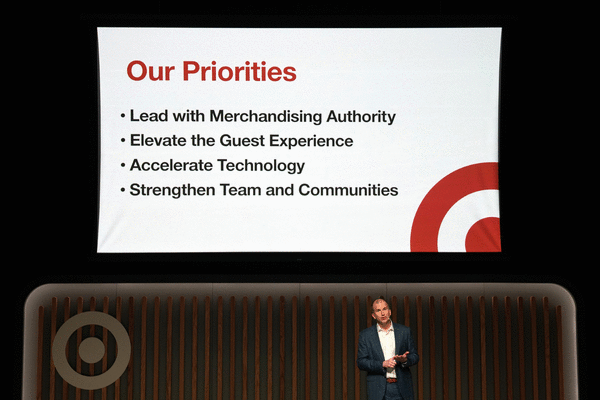
Target will spend more than $1 billion this year to improve its grocery section, one of new CEO Michael Fiddelke’s first big swings in his turnaround plan.
Groceries will occupy a larger footprint at all 130 stores remodeled this year, with more fresh foods and a more pronounced bakery area, the Minneapolis-based retailer told investors on March 3.
Fiddelke must stem more than three years of sluggish sales, including a 2.5% decline in the holiday quarter. He laid out the plan to hundreds of investors, analysts and journalists who met at Target headquarters for the company’s annual investors meeting, the first time it was in Minneapolis since 2018.
“While we are not yet at the bar I have for us, we are making progress,” Fiddelke said.
Executive after executive plainly identified where Target has lost its edge, including its latest 5% profit drop in the November-to-January stretch, and outlining how it plans to regain its relevance — and, with it, growth. And the turnaround plan touches all corners of its stores.
But the most money is going toward the grocery section.
From 2019 to 2025, Target’s food and beverage growth outpaced the industry, growing from $15 billion to $25 billion, said Chief Financial Officer Jim Lee.
“It has earned more space in our existing stores, our planned stores and our supply chain,” he said.
Groceries remain the biggest driver of sales despite losing competitive ground to rival Walmart. While groceries comprise 23% of Target’s revenue last year, it’s about half of Walmart’s sales.
The Arkansas-based company said last month most of its growth in grocery is coming from higher-income households – a demographic Target traditionally attracts.
Yet John Conlin, senior vice president of food and beverage, noted beverages, seasonal options and fresh foods are where Target has already gained ground.
The retailer aims to ramp up the rate at which it introduces new food products, especially those with a wellness brand, to “delight” its customers with a sense of discovery — a theme repeated by several executives.
“We are bringing even more of our style and design skills to food,” said Cara Sylvester, Target’s chief merchant.
Mizuho analyst David Bellinger said he didn’t expect Target to have a “full attack plan ready to go” at the meeting, but he said the company has a lot of work ahead of it as its competitors are also adjusting their strategy.
The company will spend $5 billion in capital improvements this year, $1 billion more than last year. In addition, it is reinvesting $1 billion of its operating budget into improvements.
As part of the investment, Target plans to open more than 30 stores along with the full-store remodels.
“In 2026, guests will feel bold change from us,” Fiddelke said. “And it’s not change for the sake of change. It’s purposeful change in the categories and experiences we have a real right to win in.”
Beyond the store changes, the retailer is opening a 500,000-square-foot facility in Colorado to better support its fresh food supply chain.
Home rebound, beauty expansion
Target has lost market share in the home category for two years in a row. It plans to cut the number of products sold in half to make their offerings matter.
“Home is where our design ethos first became tangible but it’s also a space where we’ve lost our way,” Sylvester said.
The company, Fiddelke said, has gathered feedback “from those who love us to those who don’t” to guide the merchandising revamp.
Target will overhaul 75% of the home assortment by June, followed by a bedding refresh in fall and changes to the in-store home departments, said Mara Sirhal, senior vice president of home merchandising.
Kitchen and dining updates will come in 2027.
Target is replacing its Ulta partnership, which it previously announced it is ending, with its own curated “Beauty Studio” designed to draw in younger guests. It will lean into Korean beauty trends and also add a mini men’s “destination” area.
Beauty has been one of its strongest performing areas, seeing a decade of consistent growth, including the holiday quarter, said Amanda Nusz, Target’s vice president of merchandising in essentials and beauty.
In-store experience
While some of the grocery blueprints resemble what may be found at a specialty retailer, Chief Operating Officer Lisa Roath said the strategy is focused on meeting the needs of busy families across Target’s different store formats.
Customers have long complained about empty shelves, particularly in pantry staples. Roath said in-store availability of essential food such as eggs and milk near the end of the fourth quarter was the strongest in several years.
“We know that one guest might be coming in for eggs, another guest might be coming in for Ryze coffee. It doesn’t matter to them,” Roath said in an interview with the Star Tribune. “They expect us to have what they want, and so we need to be consistent in that in-stock experience.”
Adrienne Costanzo, chief stores officer, said the company has also begun training employees to remerchandise departments more quickly between holidays, reducing the number of bare aisles during seasonal transitions.
Executives have attributed some of the store’s slump to weaker discretionary spending, particularly in home decor and apparel. As part of the turnaround, Target plans to revamp the presentation of its baby department in addition to the home goods section.
It also is refocusing on essentials and curations in apparel and accessories.
The retailer has developed an AI tool called “Target Trend Brain” that allows the company to catalog trends in hours instead of weeks so designers can immediately start crafting new ideas.
Gena Fox, Target’s senior vice president of apparel and accessories, said the retailer will be introducing smaller, more frequent partnerships, including one with country singer Megan Moroney.
Target recently announced a limited-time collection with Roller Rabbit, a fashion and lifestyle brand known for its 100% cotton pajamas and brightly patterned children’s clothing. The retailer is also expanding its existing partnership with Levi’s to an additional 150 stores by the end of the year.
Costanzo, chief stores officer, said in an interview with the Star Tribune that Target has more work to do to improve the presentation of its apparel and accessories, and ensure consistent size availability and a steady flow of new products.
©2026 The Minnesota Star Tribune. Visit at startribune.com. Distributed by Tribune Content Agency, LLC.









Comments