Why Hormel is struggling to profit off America's protein obsession
Published in Business News
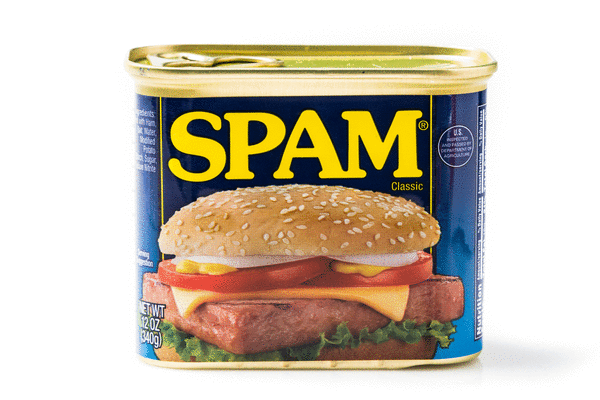
Hormel is essentially synonymous with pork, namely sizzling breakfast meats and the infamous canned ham Spam.
The Austin, Minnesota-based Fortune 500 company has only broadened its protein offerings in recent years, adding convenient deli option Columbus Craft Meats, healthy ground turkey and snack staple Planters nuts.
In an era of protein-chasing consumers, Hormel should be selling the bacon and bringing it home, too. But like much of the food industry, the company has struggled to consistently grow sales and profits.
One reason for that: the high cost of creating many pork, beef and nut products. The cost to buy pork bellies, for example, rose 25% just this fiscal year.
Add to the mix a September fire at a Skippy Peanut Butter facility, a strain of avian flu that claimed tens of thousands of Jennie-O turkeys and a recall of 4.8 million pounds of chicken, and Hormel’s stock is down 23% this year. Yet, Hormel’s sales still edged up in 2025, outpacing many packaged-food peers such as Golden Valley-based General Mills and Conagra Brands that saw sales decline.
Hormel has turned to layoffs and restructuring to help its bottom line. But figuring out how the protein-focused company can capitalize on a pro-protein customer could make all the difference.
“We do love our protein-centric portfolio because it’s varied. We offer diverse proteins across animal- and plant-based proteins and occasions like breakfast, lunch and dinner,” said Hormel President John Ghingo. “The critical part for us is how we continue to add value for consumers and meet their needs.”
Protein supports immune function and helps to build muscle. Since 2021, it’s the nutrient most Americans work to include in their diet, according to the International Food Information Council (IFIC).
Of the 57% of Americans who dieted last year, high-protein regimens were the most common.
“It’s amazingly popular,” said Joanne Slavin, a registered dietitian and University of Minnesota nutrition professor.
Protein should account for 10% to 35% of daily calories, according to the Mayo Clinic, and the recommended daily allowance is 0.8 grams per kilogram of body weight. For an 165-pound person, that’s 60 grams of protein per day. Most people in the U.S. actually meet or exceed their protein needs, according to the Mayo Clinic.
A “good source of protein” was the No. 1 criteria to define a healthy food last year, topping terms like “fresh” and “low in sugar,” according to the IFIC. Slavin said it’s the most important nutrient to consume every day.
Many food companies have innovated to add protein to water, doughnuts, chips, Pop-Tarts and more to profit off the protein craze. But Hormel has its own playbook.
“The way we do protein is through the food,” Ghingo said. “We don’t do additives.”
Meat, dairy, eggs, beans and nuts are all natural sources of protein, and Hormel already provides many products in those categories. But if the company isn’t adding more protein to its protein, and rising costs keep eating away at profits, Hormel has at least one simple solution.
“Give me more hogs,” said Pooran Sharma, managing director of equity research for financial services firm Stephens.
Sharma called Hormel’s pork business “challenged.” Hormel buys a sizable portion of its pork from meat-packers. Since hog supply this year was limited, Hormel has had to pay more for the product, which lead to higher costs.
While Sharma remained positive about Hormel’s five-year outlook, he said it was hard to be optimistic about the company while costs remain high. If pork, beef and nut costs don’t decrease, the profit margin will stay thin.
Both Hormel leaders and Kristoffer Inton, a senior equity analyst for Morningstar Research Services, predicted pork costs will stop rising beginning in 2026. Inton added some Hormel products, such as Jennie-O ground turkey, remain a “super-attractive business.”
Avoiding recalls and plant closures as well as having more product availability will help Hormel in the coming year. But coupling those predicted lower costs with a greater marketing presence for Hormel’s core brands could lead to a greater positive shift for the company.
“The competitiveness in food is quite high right now because the consumer is so strained,” Inton said. “So getting their attention, being on trend with protein, is a good strategy.”
Hormel’s competitors have taken advantage of the protein wave.
Last year, General Mills released high-protein variations of Cheerios and Annie’s Mac & Cheese. Two months ago, it partnered with energy drink and nutrition brand Ghost to launch a new line of protein bars.
Tyson Foods announced a new chicken nugget product in July that advertises high protein of 23 grams per serving on the bag.
Former Kraft Heinz CEO Miguel Patricio said in a 2021 news release after the $3.3 billion sale of Planters nuts to Hormel that the move allowed his company could focus on other protein brands, like P3 Portable Protein Packs and Lunchables. Both now display protein count on their packaging.
Slavin said the quick fix of emphasizing protein count on packaging is exactly what Hormel needs to do.
“You need to refresh the idea that you’ve been an important provider of protein forever, for the U.S. and for U.S. consumers,” Slavin said.
Ghingo said Hormel will lean into easy breakfasts and dinners with chicken tenders and frozen chicken breakfast sausages and also has created new products such as precooked, preportioned, sandwich-ready bacon.
Protein is a long-term trend, not a passing fad, he added, and Hormel wants to be part of a consumer’s lifelong habits.
“It’s not just about the amount of protein but how it plugs into your daily life,” Ghingo said. “Jennie-O ground turkey is a very good source of lean protein, but how we sell it is how it works for different occasions — ready for a meal, in the spur of the moment.”
The U.S. Agriculture and Health and Human Services departments publish dietary guidelines every five years and have indicated the upcoming version would emphasize eating more meat, full-fat dairy and saturated fats.
Slavin worked on the 2010 guidelines and said this could help more Americans consider animal products with higher amounts of saturated fats and sodium, which can be unhealthy without moderation. Those are present in much of Hormel’s food catalog
Abdurahman Hassan from Minneapolis is one protein-conscious consumer. The 19-year-old gymgoer eats 180 grams of protein per day to meet his fitness goals. That could be in the form of bars, powders, eggs, chicken, salmon or vitamins, and he’s willing to kick in a little extra for the added wellness benefits.
“Whatever I spend on protein or additional things, I’m taking away from my savings,” Hassan said. “So if it’s beneficial to me, I really don’t mind spending a couple more bucks on it.”
Hormel interim CEO Jeffrey Ettinger said as Hormel shifts more of a focus toward its core brands, it would continue to center protein. That, coupled with Hormel’s presence in both retail and food service, puts the company in a solid strategic position.
“We’ve evolved from a meat company into a consumer-focused company,” Ettinger said. “But unlike other consumer food companies, we are the consumer company that wins with protein.”
(Brooks Johnson of the Minnesota Star Tribune contributed to this report.)
©2025 The Minnesota Star Tribune. Visit at startribune.com. Distributed by Tribune Content Agency, LLC.










Comments